I saw Extremely Loud and Incredibly Close a week ago, and while it certainly was not a bad movie, there was something bothering me, something I have been annoyed about in films for a while now. The movie had a lot of shots of September 11, really getting an emotional rise out of the audience by having the protagonist’s father dying in the towers. I understand that it is an adaptation from a book, but using 9/11 felt cheap. The whole audience lived through the event, it was very easy to exploit our emotions to make the movie seem more relevant or deep.
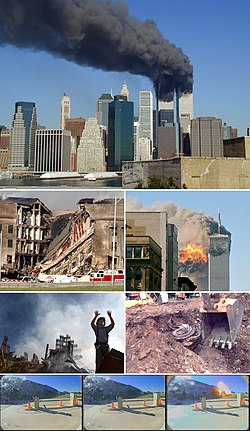
You, the reader, probably would have been a lot happier without this picture of September 11. The memory still haunts all of us. It feels like a cop out to add it to films, because instead of making an actual emotional movie, they just cash in on our emotional feelings associated with September 11. Extremely Loud is not the first movie to do this, but seeing as how its been nominated for Best Picture it might be seen as the definitive 9/11 movie. I don’t think a good film has been made about the event. As someone who studies history and memory, I don’t think that anyone has made an honest enough film about it that was not a ploy for attention or sentimental feelings. Oliver Stone has been doing this sort of thing ever since using Vietnam in Platoon kicked off his career as one of Hollywood’s big name directors, and his film World Trade was definitely a way for him to try to maintain some relevance. Around that same time United 93 came out and both movies had people stating that it was too soon for 9/11 to be used for cinema.
That is not necessarily a fair criticism, because if a tribute is done right it is never too soon. Casablanca, the universally agreed upon best film of World War II was released during the war, as was The Great Dictator, Lifeboat, and over one hundred other films. A movie about the death of Bin Laden is already in preproduction. But with an event so awful, the movies that follow have to be done right, or else the audiences will dismiss the films and they’ll be largely forgotten. I think that no major film so far about 9/11 has been made that will be remembered in a couple of years; World Trade Center, Reign Over Me, United 93 and Remember Me are already largely forgotten.
World War I is probably the greatest historical example of this in action. World War I was so awful, so tragic that very few have tried to make films about it. It was the bloodiest war in history up until that point; over fifteen million people died, almost an entire generation was wiped out in France, it saw the first major use of new technologies such as planes, machine guns, tanks, and mustard gas, and the final peace was so precarious that World War II was almost inevitable. Therefore, of the few films made about the war, the best ones are the most awful, the ones that show the wanton disregard for human life and the confusion of what was going on. The best examples are All Quiet on the Western Front and Stanley Kubrick’s Paths of Glory.
That is how I wish Hollywood would handle 9/11: rarely, and make it emotional and visceral when they do. Films are a great medium to provide historical catharsis, and I would not discourage trying to memorialize events through film, but in practice its often felt cynical in regards to 9/11. My updates are not about to resume, although I wish they could, but I got most of my film ideas out of my system with this blog already, and I am terribly busy, however sporadic updates may or may not continue.
You, the reader, probably would have been a lot happier without this picture of September 11. The memory still haunts all of us. It feels like a cop out to add it to films, because instead of making an actual emotional movie, they just cash in on our emotional feelings associated with September 11. Extremely Loud is not the first movie to do this, but seeing as how its been nominated for Best Picture it might be seen as the definitive 9/11 movie. I don’t think a good film has been made about the event. As someone who studies history and memory, I don’t think that anyone has made an honest enough film about it that was not a ploy for attention or sentimental feelings. Oliver Stone has been doing this sort of thing ever since using Vietnam in Platoon kicked off his career as one of Hollywood’s big name directors, and his film World Trade was definitely a way for him to try to maintain some relevance. Around that same time United 93 came out and both movies had people stating that it was too soon for 9/11 to be used for cinema.
That is not necessarily a fair criticism, because if a tribute is done right it is never too soon. Casablanca, the universally agreed upon best film of World War II was released during the war, as was The Great Dictator, Lifeboat, and over one hundred other films. A movie about the death of Bin Laden is already in preproduction. But with an event so awful, the movies that follow have to be done right, or else the audiences will dismiss the films and they’ll be largely forgotten. I think that no major film so far about 9/11 has been made that will be remembered in a couple of years; World Trade Center, Reign Over Me, United 93 and Remember Me are already largely forgotten.
World War I is probably the greatest historical example of this in action. World War I was so awful, so tragic that very few have tried to make films about it. It was the bloodiest war in history up until that point; over fifteen million people died, almost an entire generation was wiped out in France, it saw the first major use of new technologies such as planes, machine guns, tanks, and mustard gas, and the final peace was so precarious that World War II was almost inevitable. Therefore, of the few films made about the war, the best ones are the most awful, the ones that show the wanton disregard for human life and the confusion of what was going on. The best examples are All Quiet on the Western Front and Stanley Kubrick’s Paths of Glory.
That is how I wish Hollywood would handle 9/11: rarely, and make it emotional and visceral when they do. Films are a great medium to provide historical catharsis, and I would not discourage trying to memorialize events through film, but in practice its often felt cynical in regards to 9/11. My updates are not about to resume, although I wish they could, but I got most of my film ideas out of my system with this blog already, and I am terribly busy, however sporadic updates may or may not continue.
Comments
Post a Comment